
What AI is Teaching Me About Leadership and Delegation
Delegation is one of the hardest skills to master in health IT leadership. What surprised me is how much AI is helping me improve. In this article, I share four lessons AI is teaching me about clarity, context, and communication — and how they translate directly to better project outcomes.


When I first started experimenting with artificial intelligence, it was for fairly routine tasks: drafting emails, generating ideas, and testing out ways it might save me time. What I didn’t expect was that it would change the way I delegate as a consultant and project leader.
Delegation is never simple. It’s consistently rated as one of the hardest leadership skills to develop, especially for those of us who moved from technical or analyst roles into positions where we lead projects, coordinate programs, or advise teams. I experienced that same shift in my own career: from individual contributor, to team leader, to director, and now to consultant leading projects and supporting client teams. What I’ve learned along the way is that delegation always brings its own challenges. At times I have given instructions that were too broad, expected people to understand background information I never shared, or assumed that their idea of success matched mine. Those habits created confusion and rework, and they continue to be areas where I push myself to improve.
AI has become an unlikely teacher. The more I work with it, the more I notice how much my delegation habits are shaping both my effectiveness and the growth of the people I work with. By forcing me to be explicit and clear in ways that I wasn’t before, AI is giving me a sharper perspective on how to set my projects up for success.
🔎 The specificity requirement
I’ve quickly learned that vague instructions to AI lead to vague results. Asking for “an outline for a status update presentation” produces a generic, nearly unusable draft. Instead, if I ask for “a 3-slide template for a project status update for executive stakeholders, highlighting build progression, spend rate, and decisions needed, with clear bullet points and simple visuals,” I get something much more useful.
That clarity requirement translates directly to delegation. I see how many of my requests to team members are too open-ended. Instead of saying “update the implementation plan,” I now specify scope, format, audience, and deadlines. Just as with AI, precision produces better results.
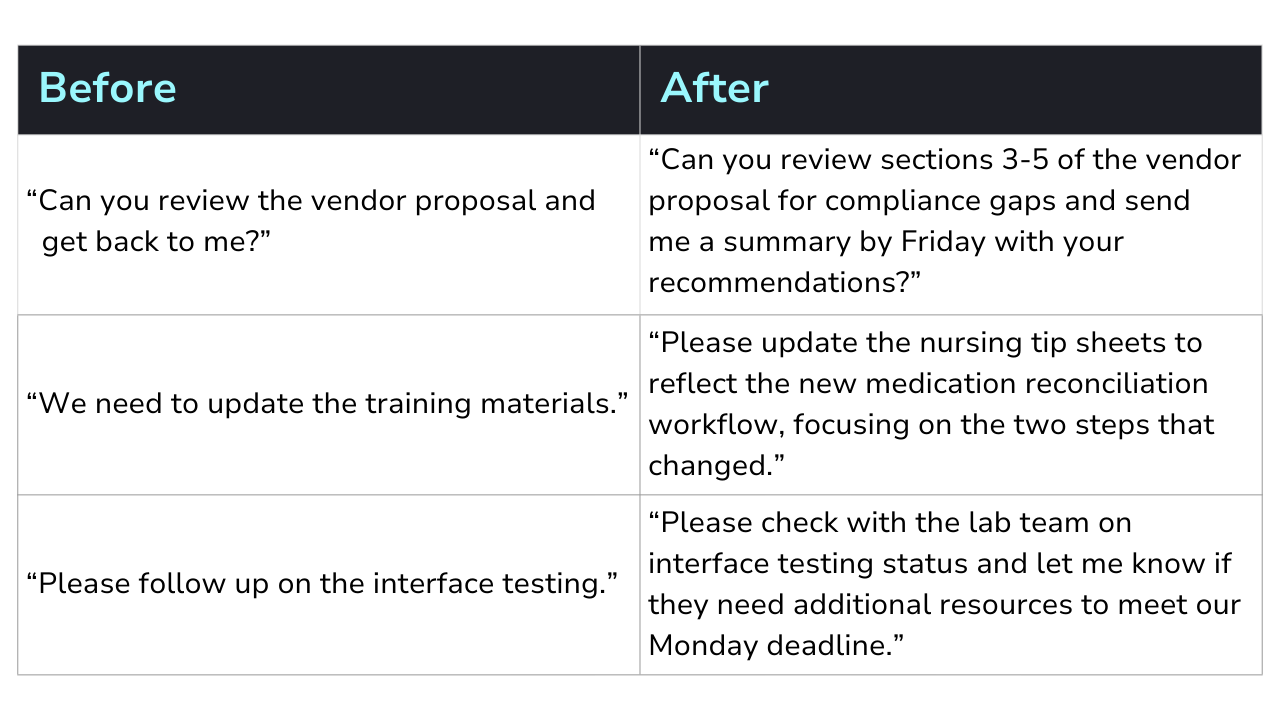
This shift reduces rework, improves results, and gives team members greater confidence in delivering exactly what is needed.
🌎 Context is everything
AI also reminds me that context changes everything. A request for “a project timeline” is vague, but “a project timeline for a go live that must happen before fiscal year-end, considering limited testing resources and a holiday blackout period” produces a far better result.
The same lesson applies to people. I sometimes assume that my team members share the same background knowledge I carry as a leader. They do not, and it’s not fair to expect them to. When I start providing the “why” behind requests, sharing constraints and organizational priorities, and explaining what success looks like, the quality of work improves dramatically.
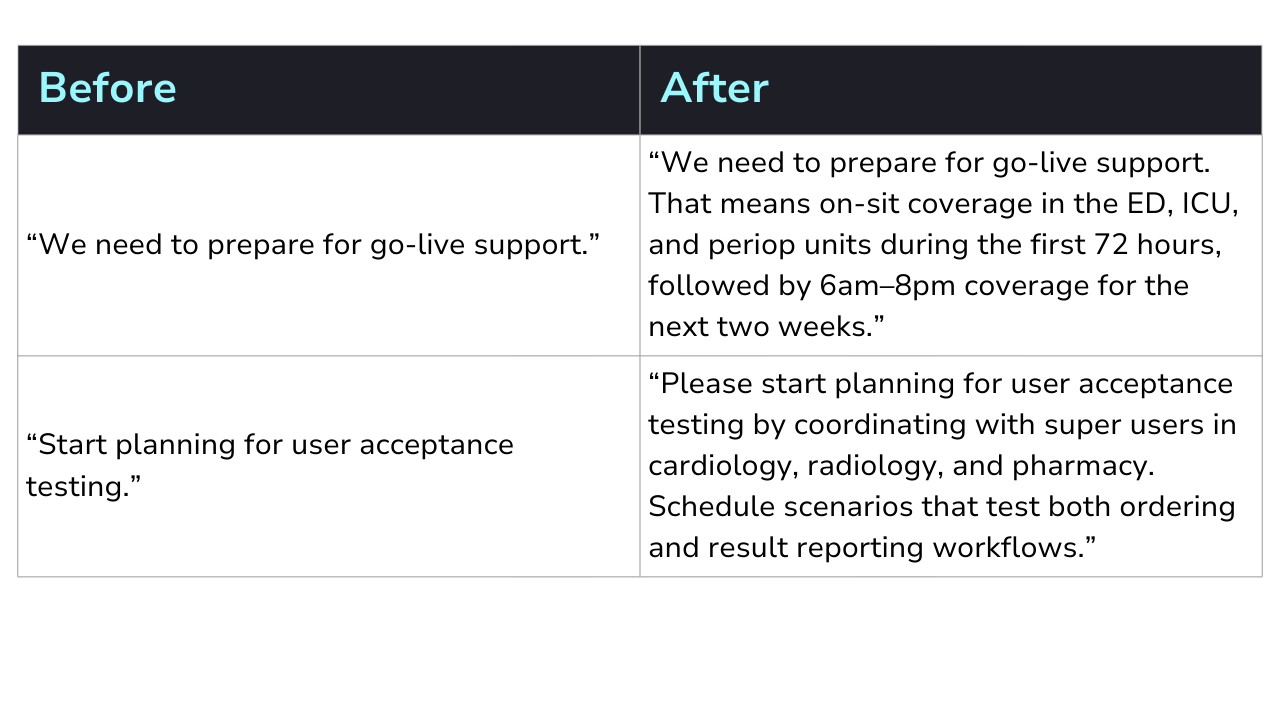
The result is stronger trust, higher quality outcomes, and team members who feel more confident in their work.
🔁 The iterative feedback loop
AI rarely gives me the perfect answer on the first try. Iterating, providing feedback, refining, and adjusting leads to the best outcomes. I apply the same approach with my team. Delegation is not “assign and forget.” It’s “assign and guide.”
Instead of waiting for final deliverables, I now build check-in points. A quick 25% or 50% progress update lets me offer guidance and prevent major rework. More importantly, it shows my team that I’m not just handing off work and walking away. I’m supporting their success.
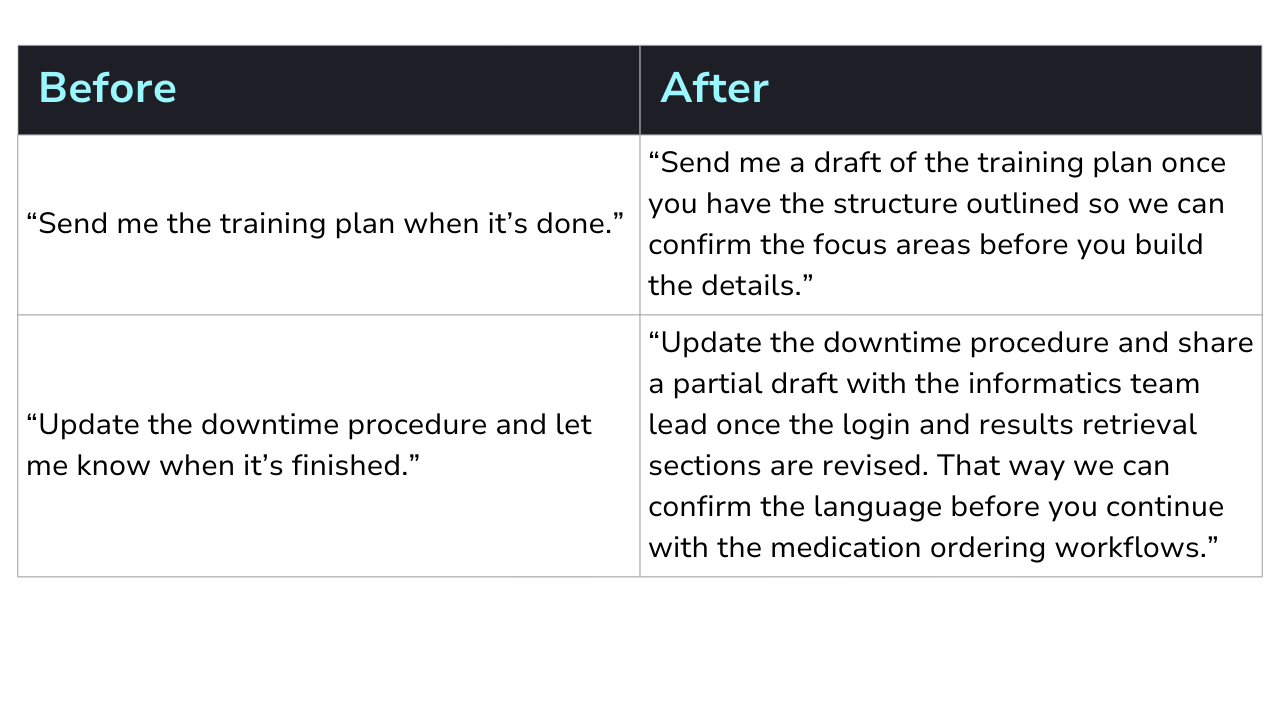
The result is stronger trust, higher quality outcomes, and team members who feel more confident in their work.
🤖 Better delegation through an unlikely teacher
What stands out most is how much AI sharpens my communication with people. Specificity prevents frustration and rework. Context helps my team make smarter decisions. Shared definitions keep us aligned. Iterative feedback creates stronger results and relationships.
The irony is that by learning how to communicate with artificial intelligence, I’m becoming much better at communicating with actual humans.
As a consultant, I see these lessons come up almost daily. Clear delegation helps projects run smoothly, strengthens relationships with client teams, and makes it easier for everyone to succeed. Whether you are just starting your leadership journey or are guiding large-scale initiatives, consider how one of these principles could strengthen your delegation this week.